


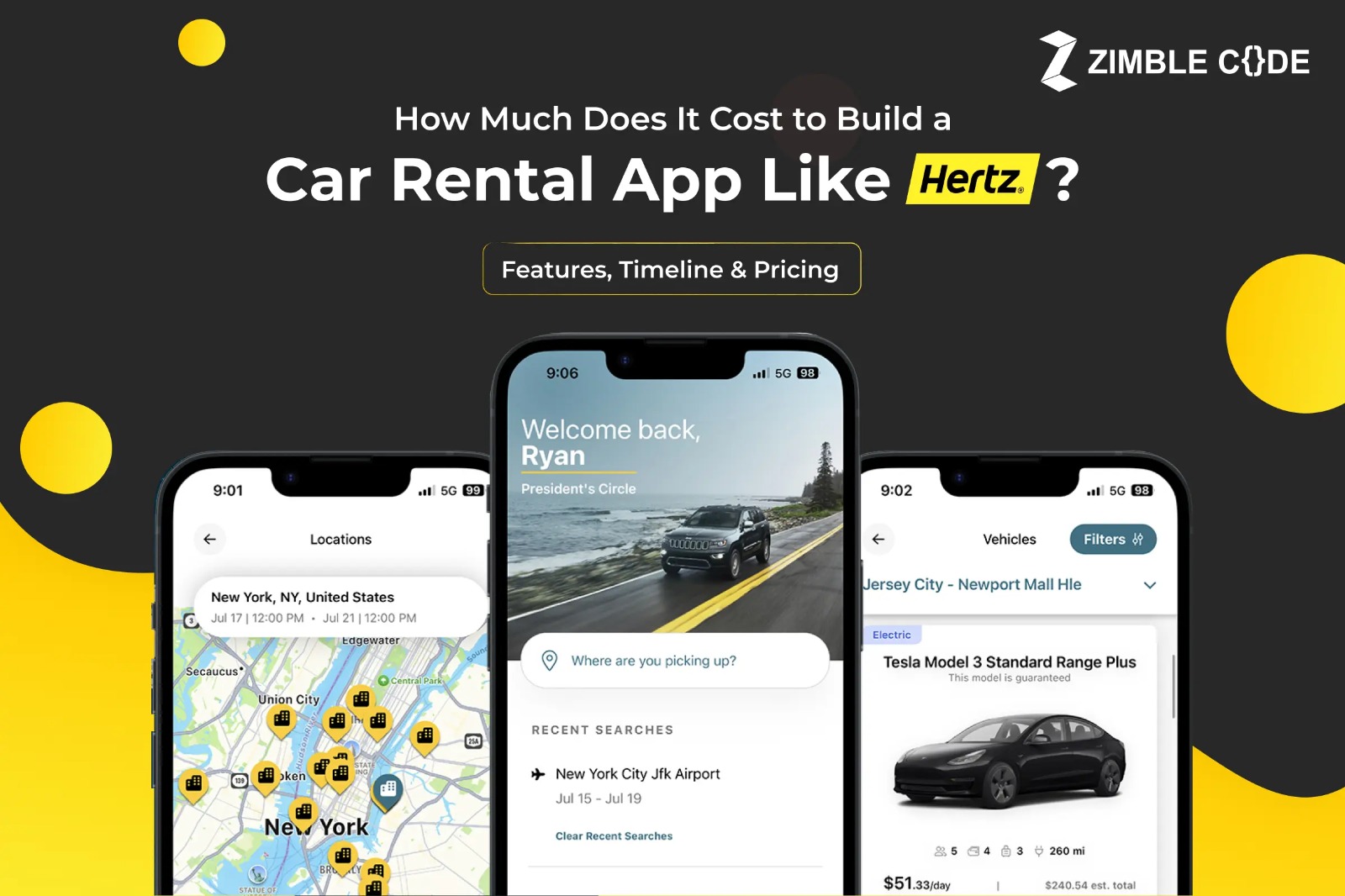
Why are car rental apps gaining so much attention today? As travel patterns change and urban mobility increases, people increasingly prefer renting cars through mobile apps rather than visiting rental counters. With just a few taps, users can search for vehicles, book instantly, make payments and manage rentals, making car rental apps an essential part of modern transportation.
This shift has encouraged entrepreneurs and startups to closely examine successful platforms such as Hertz, Turo, Getaround, and Zipcar. These apps have proven that digital-first rental solutions can serve individual travelers, businesses, and long-term users efficiently. However, building an app at this level requires careful planning, advanced features and a scalable structure.
This blog will explore the essential features of car rental apps like Hertz and how development timelines affect overall costs.
Essential Features for a Hertz-Like Car Rental App
A Hertz-like car rental app development must deliver convenience, reliability and scalability. In fact the right features ensure users can book vehicles effortlessly while businesses manage fleets efficiently. They create a seamless rental experience, support operational control and allow the platform to grow with changing customer and market demands when these features are well integrated.
1. User-Facing Features
User-facing features focus on creating a smooth, intuitive, and reliable experience for customers. These features help users find vehicles, complete bookings, and manage rentals with ease to ensure satisfaction and encourage repeat usage.
- User Registration and Profile Management
User registration allows customers to create secure accounts using email, phone numbers, or social logins. Also profile management enables users to store personal details, payment preferences and booking history.
This reduces repetitive data entry, speeds up future reservations and delivers a more personalized experience across the app.
- Vehicle Search, Filters, and Detailed Listings
Vehicle search and filtering help users quickly find suitable cars based on location, date, price, and vehicle type. Detailed listings provide essential information such as images, rental terms, fuel policies, and pricing. In fact, clear visibility improves decision-making and builds confidence during the booking process.
- Booking, Scheduling and Rental History
This feature allows users to select pickup and return times, confirm reservations and manage bookings smoothly. In fact access to rental history helps users review past trips, track expenses and easily rebook vehicles. A structured booking system minimizes confusion and enhances overall user convenience.
- Secure Payment Gateway Integration
Secure payment integration enables users to complete transactions using cards, wallets or online payment methods. Further encrypted payment processing protects sensitive information and ensures reliable transactions. A seamless checkout experience reduces payment failures, improves trust, and encourages users to complete bookings without hesitation.
- Push Notifications and Alerts
Push notifications keep users informed about booking confirmations, pickup reminders, payment updates, and service changes. Moreover, timely alerts enhance communication and reduce missed actions. This feature also supports promotional messaging to help businesses stay connected with users without disrupting their experience.
- Ratings, Reviews, and Feedback System
Ratings and reviews allow users to share their rental experiences and provide feedback on vehicles and services. In fact, honest reviews help future users make informed choices while encouraging service quality. This transparency builds trust and strengthens the platform’s credibility over time.
2. Admin & Fleet Management Features
Admin and fleet management features provide businesses with complete operational control. In fact these tools help manage vehicles, users, pricing and bookings efficiently to ensure smooth day-to-day operations and consistent service delivery.
- Admin Dashboard and Analytics
The admin dashboard offers a centralized view of platform performance including bookings, revenue and user activity. Further analytics help identify trends, track growth and monitor demand. As a result these insights support better decision-making and enable businesses to optimize operations effectively.
- Fleet Inventory Management
Fleet inventory management enables administrators to add, update and manage vehicles across locations. It helps track availability, maintenance schedules and vehicle status in real time. As a result organized fleet control reduces downtime and ensures accurate customer listings.
- Pricing and Availability Control
This feature of the car rental app allows administrators to adjust rental prices based on demand, season or location. Further availability management prevents overbooking and ensures accurate vehicle status. Therefore flexible pricing and availability controls help maximize revenue for maintaining a reliable booking experience.
- Booking and Cancellation Management
Booking and cancellation management allows administrators to oversee reservations, handle modifications and resolve conflicts efficiently. In fact clear controls improve response times and reduce operational errors. Therefore, this feature ensures consistent service quality and supports smooth communication with users.
- User and Document Verification
User and document verification ensure renters meet legal and safety requirements. The app allows users to upload driving licenses and identity documents for validation. Thereby automated verification reduces fraud, speeds up approvals and builds trust for both customers and rental providers.
3. Advanced & Scalability Features
Advanced features support long-term growth and enterprise-level operations. These capabilities improve automation, personalization and efficiency for enabling the app to scale along with maintaining high performance and user satisfaction.
- Real-Time Vehicle Tracking and GPS Integration
Real-time vehicle tracking enables users to locate cars and view pickup points easily. Moreover, GPS integration also helps businesses monitor fleet movement and improve security. This feature enhances transparency, supports better coordination, and improves overall rental reliability.
- Dynamic Pricing and Demand-Based Rates
Dynamic pricing adjusts rental rates based on demand, time, and location. This approach helps businesses optimize revenue while remaining competitive. Also, demand-based pricing improves vehicle utilization and enables flexible responses to market fluctuations.
- Loyalty Programs and Promo Codes
Loyalty programs reward frequent users with discounts, points or exclusive benefits. Further promo codes attract new customers and encourage repeat bookings. These incentives improve user retention, strengthen brand engagement, and increase long-term customer value.
- Multi-Location and Regional Fleet Management
Multi-location fleet management allows businesses to operate across different regions from a centralized system. It supports location-specific pricing, availability and reporting. This feature enables smooth expansion while maintaining operational consistency and control.
- AI-Powered Insights and Reporting
AI-powered insights analyze user behavior, booking trends and fleet performance. These reports help identify opportunities for improvement and support smarter planning. Thereby data-driven decisions enhance efficiency, customer experience and overall profitability.
How Much Does It Cost to Build a Car Rental App in the USA?
The car rental app development cost is closely tied to the development timeline and feature complexity. Let’s have a detailed understanding of pricing by development stage
- Basic Hertz-Style MVP
A basic Hertz-style MVP focuses on essential user features such as registration, vehicle search, booking, payments, and limited admin controls. With a 3–4 month development timeline, this version is ideal for validating ideas. In the USA, development costs generally range between $50,000 and $70,000.
- Mid-Level Car Rental App
Mid-level on-demand car rental app development in Florida, USA, includes a complete user app along with robust admin and fleet management tools. As a result, the added backend complexity extends development to 4–6 months. The estimated cost typically falls between $70,000 and $100,000 due to higher engineering effort and U.S. labor rates.
- Advanced Hertz-Like App
An advanced Hertz-like app introduces real-time vehicle tracking, dynamic pricing models and customer loyalty programs. These features require deeper integration and extensive testing which will push the timeline to 6–9 months. In the U.S. market such apps usually cost between $100,000 and $150,000+.
- Enterprise-Grade Platform
An enterprise-grade platform is designed for large-scale operations and long-term growth. It includes AI-driven automation, IoT or telematics integration, and advanced analytics. In fact development of such apps typically takes 9 months or more. With U.S.-based teams, costs often range from $150,000 to $300,000+ as per the level of customization.
Conclusion
Building a car rental app like Hertz requires more than a clear idea of features, timeline, and pricing. It demands technical expertise, market understanding, and the ability to balance performance with scalability. In fact partnering with an experienced car rental app development company such as ZimbleCode helps transform complex requirements into a reliable and future-ready platform. With expert guidance, businesses can avoid costly missteps, optimize development investment and launch a secure, high-performing app tailored to long-term growth in the competitive U.S. market.
Frequently Asked Questions (FAQs)
Q1. How much does it cost to build a car rental app like Hertz?
The cost to build a car rental app like Hertz usually ranges between $30,000 and $150,000. Pricing depends on factors such as app features, platform choice (iOS, Android, or both), UI/UX design complexity, and the development team’s location.
Q2. What are the essential features of a car rental app?
Essential features of a car rental app include user registration, vehicle search and filters, real-time availability, booking and reservation management, GPS tracking, secure payment gateways, push notifications, and an admin dashboard for fleet and user management.
Q3. How long does it take to develop a car rental mobile app?
A basic car rental mobile app typically takes 3–4 months to develop. An advanced app with features like AI-based pricing, fleet management, analytics, and third-party integrations can take 6–9 months.
Q4. Can a car rental app be customized for business needs?
Yes, car rental apps can be fully customized to meet specific business requirements. Custom features may include dynamic pricing, loyalty and reward programs, multi-language support, third-party API integrations, and white-label solutions.




Leave A Comment