


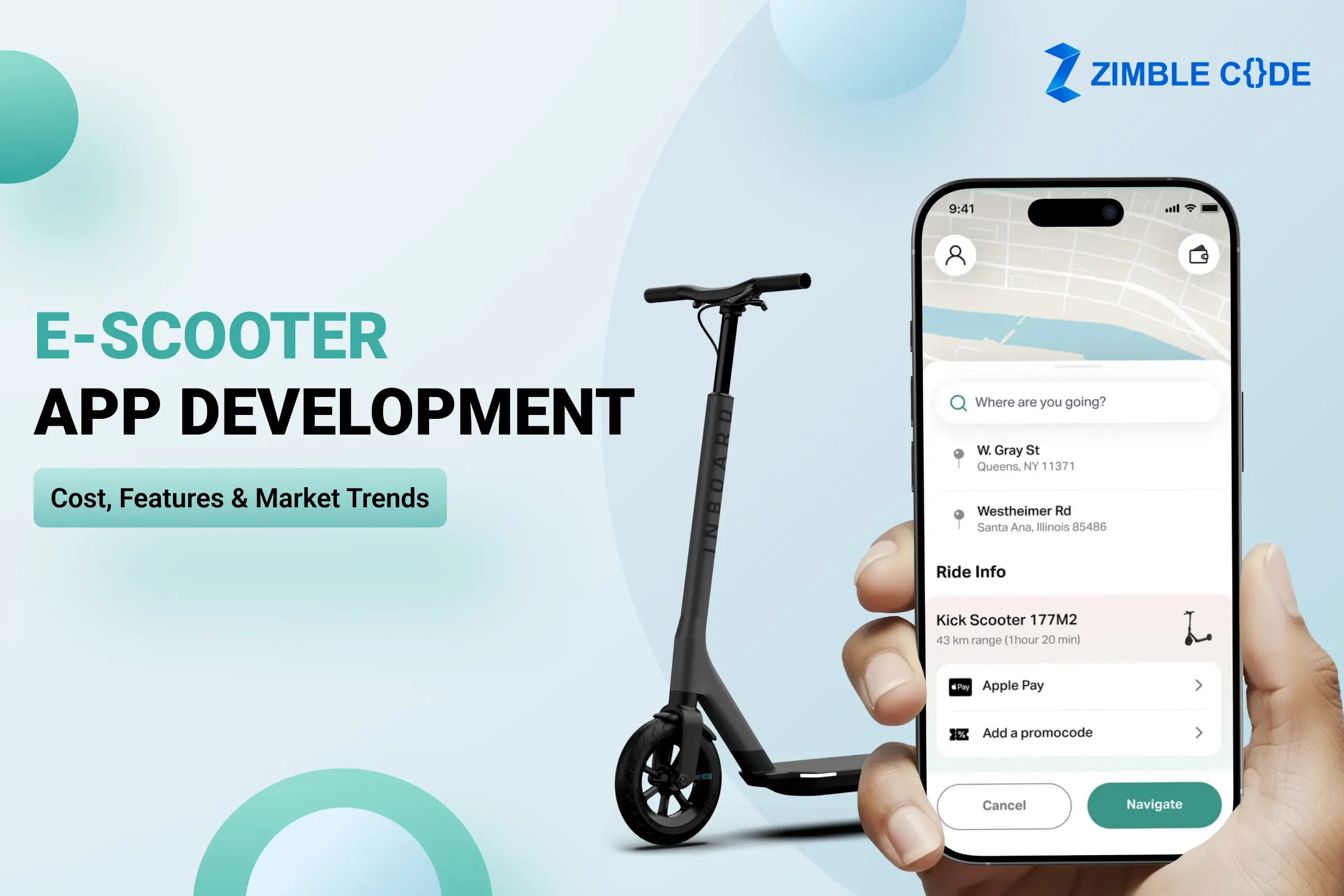
With millions of shared rides already completed across the UK, eScooters are closing the gap between public transport and door‑to‑door convenience. Behind every ride is a mobile app that helps users find, unlock, and pay for scooters in seconds, turning a few taps into an efficient urban journey.
But building a successful eScooter app goes beyond simple functionality, especially in the UK’s evolving regulatory environment, where compliance and safety are priorities. So how do you design an app that users love while still staying cost‑effective and future‑ready?
This blog will explore the essential features that set eScooter apps apart, break down realistic development costs in the UK market and uncover the key trends shaping this fast‑moving sector.
Market Trends Shaping Electronic Scooter App Development in the UK
The UK eScooter market is evolving rapidly as urban mobility needs, sustainability goals and regulatory frameworks continue to intersect. In fact these trends collectively influence how eScooter apps are designed, what features users expect and how businesses plan costs while preparing for long-term scalability and compliance.
-
Rising Urban Adoption of Shared eScooters
The shared eScooters are increasingly used for last-mile connectivity as cities prioritise short-distance travel solutions. In fact millions of rides have been recorded since national trials begans which indicates the strong commuter acceptance and signalling sustained demand for app-based scooter services across urban regions.
-
Market Growth and Commercial Opportunity
The UK eScooter sharing market continues to expand steadily with projected user growth reaching several million active riders over the next few years. As a result revenue from shared micromobility services is expected to rise consistently for attracting new operators and technology providers.
-
Evolving Regulatory Environment
Although private eScooters remain restricted, government-backed rental trials have expanded across multiple cities. Consequently, eScooter app development company in the UK must adapt to location-based rules, safety requirements, and reporting standards, and prepare platforms that can quickly adjust as permanent legislation is introduced.
-
Infrastructure and Smart City Integration
The UK cities are investing in cycling lanes, designated parking zones and low-emission transport networks. This infrastructure growth supports safer eScooter usage and encourages tighter integration between eScooter apps, public transport systems, and emerging smart city technologies.
-
Shifting User Expectations and Digital Behaviour
Users of the eScooter app increasingly expect fast onboarding, real-time availability, and seamless digital payments. In fact intuitive mobile experiences and reliable app performance have become essential for user retention in a competitive mobility market with over 90% of UK adults using smartphones.
-
Sustainability-Driven Adoption
Environmental awareness continues to shape transport choices as eScooters produce significantly lower emissions per mile than cars. As a result this sustainability advantage aligns with national carbon reduction targets which further strengthen long-term adoption and reinforce demand for scalable and eco-focused mobility apps.

Key Features of eScooter Rental App Development in the UK
eScooter apps in the UK must deliver a smooth digital experience while supporting safety, compliance and operational efficiency. In fact each feature serves a clear purpose in simplifying rides, managing fleets and meeting the expectations of users and local authorities. As a result build an eScooter app in the UK with the following features:
-
User Onboarding and Account Management
A clear, straightforward sign-up process lets users create an account with their email or mobile number without confusion. Thereby, secure profile controls and stored payment details build trust, and basic verification supports responsible usage within regulated UK operating areas.
-
Real-Time Scooter Discovery and Maps
Live maps display nearby eScooters, including their availability and battery status. In fact, accurate GPS tracking helps users plan short trips, locate approved parking zones, and avoid restricted areas for improving overall convenience and reducing misuse.
-
QR Code Scanning and Ride Activation
QR code scanning lets users unlock eScooters directly in the app. This fast contactless approach improves ride accessibility, reduces reliance on manual support, and ensures each journey is properly logged for operational oversight.
-
In-App Payments and Digital Receipts
Integrated payment options allow users to pay securely using cards or digital wallets. In fact instant digital receipts make transactions clear and easy to track which aligns well with the UK’s strong preference for cashless transport services.
-
Ride Tracking & Fare Calculation
The app automatically captures distance, time and route details during each trip. Thereby, transparent fare calculation keeps users informed about charges, whereas recorded ride data helps operators maintain billing accuracy and evaluate service performance.
-
Safety and Compliance Features
Safety-focused tools such as speed control, geofencing and emergency alerts encourage responsible riding. Also, the presence of such features in the micro mobility app development helps operators align with local council requirements and demonstrate compliance with ongoing eScooter trial regulations.
-
Admin Panel and Fleet Management Tools
A centralised admin panel enables operators to manage users, monitor scooter locations, and review payment activity. In fact, usage insights and maintenance alerts support efficient fleet operations and help maintain consistent service levels.
-
Advanced and Market-Driven Enhancements
There are various features such as smart locks, accessibility options and system integrations to enhance usability across diverse user groups. In fact, these additions improve scalability and prepare the platform to adapt as UK mobility policies and user expectations continue to evolve.
How Much Does it Cost to Build an eScooter App in the UK?
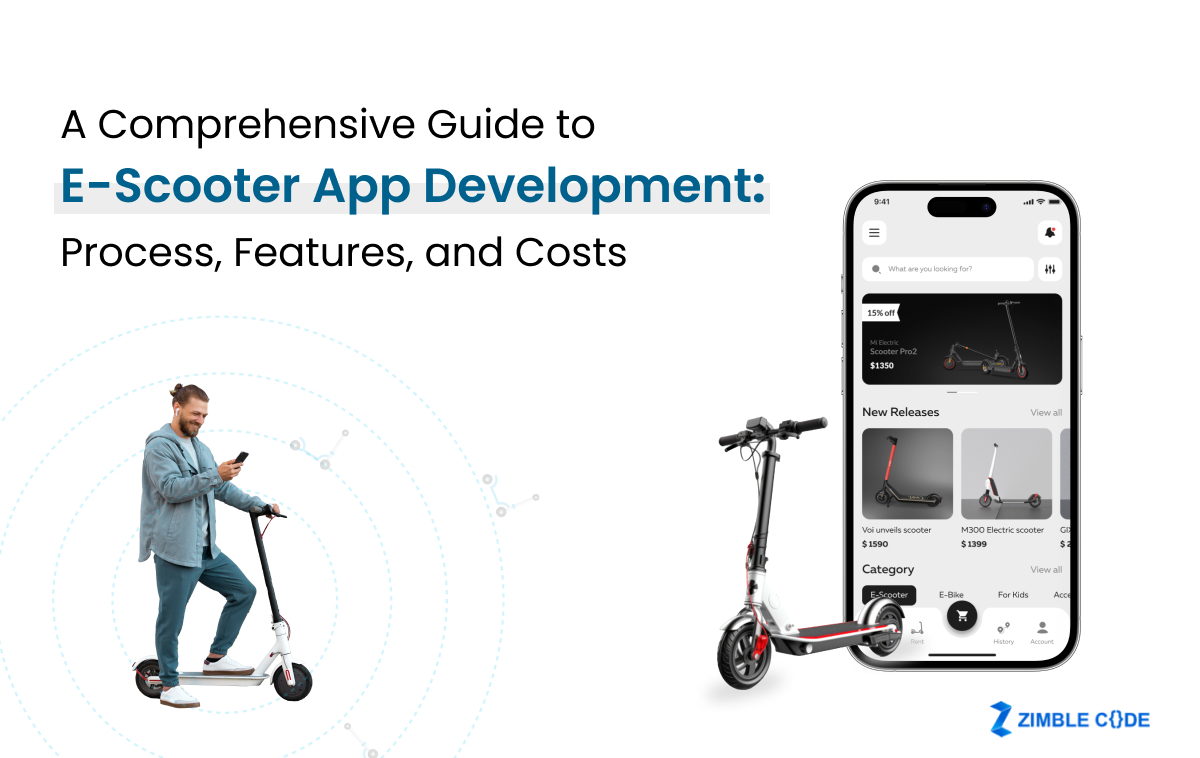
The cost of building an eScooter app in the UK depends on the app’s complexity, feature set, and development approach. A basic eScooter app with essential features such as user registration, ride tracking and in-app payments typically costs between £25,000 and £40,000 with cross-platform app development in the UK.
As more functionality is added, development costs increase. An app that includes an admin dashboard, real-time fleet monitoring, usage analytics and enhanced safety features usually falls within the £50,000 to £100,000 range. These features require a more robust backend and additional integrations which add to both development time and cost.
Moreover an electric scooter app development price can rise to £100,000 to £200,000 or more for custom UI design, advanced security and smart mobility integrations for large-scale platforms built with native iOS and Android apps. Furthermore, UK-based development teams often charge higher hourly rates commonly between £80 and £150 per hour which reflects local expertise and quality standards.
Beyond initial development, ongoing expenses must also be planned. In fact maintenance, performance updates, and regulatory adjustments typically cost around 15–20% of the original build cost per year. As a result long-term budgeting is an essential part of eScooter app planning in the UK market.

Building a Market-Ready eScooter App in the UK
Undoubtedly creating a successful eScooter app in the UK requires a careful balance of market insight, smart feature design, and realistic cost planning. In fact businesses can shape an app that is both practical and appealing by understanding urban commuting patterns and user behaviour.
Moreover, features such as real-time scooter tracking, seamless payments, and fleet management not only enhance the user experience but also provide operators with actionable insights to optimise efficiency and compliance. In turn development costs reflect the sophistication of these features, the choice between native or cross-platform development and the scalability of the underlying infrastructure.
Therefore starting with a minimum viable product allows businesses to validate demand and prioritise features that deliver maximum impact. In fact the incremental upgrades ensure the app evolves alongside regulatory clarity and growing market adoption. As a result an experienced mobile app development company in the UK such as ZimbleCode brings expertise in building reliable, scalable, and user-centric mobility solutions, helping businesses navigate the competitive UK landscape successfully.
Frequently Asked Questions (FAQs)
Q1. How to build an eScooter app?
You can initiate by defining key features, selecting a development approach, ensuring regulatory compliance and partnering with experienced developers to deliver a scalable solution.
Q2. Is eScooter app development profitable in the UK?
Profitability depends on fleet size, user adoption, pricing strategy, and operational efficiency in the growing urban mobility market.
Q3. How long does it take to develop an eScooter app?
Development typically ranges from 3 to 6 months depending on complexity and feature set.



Leave A Comment