


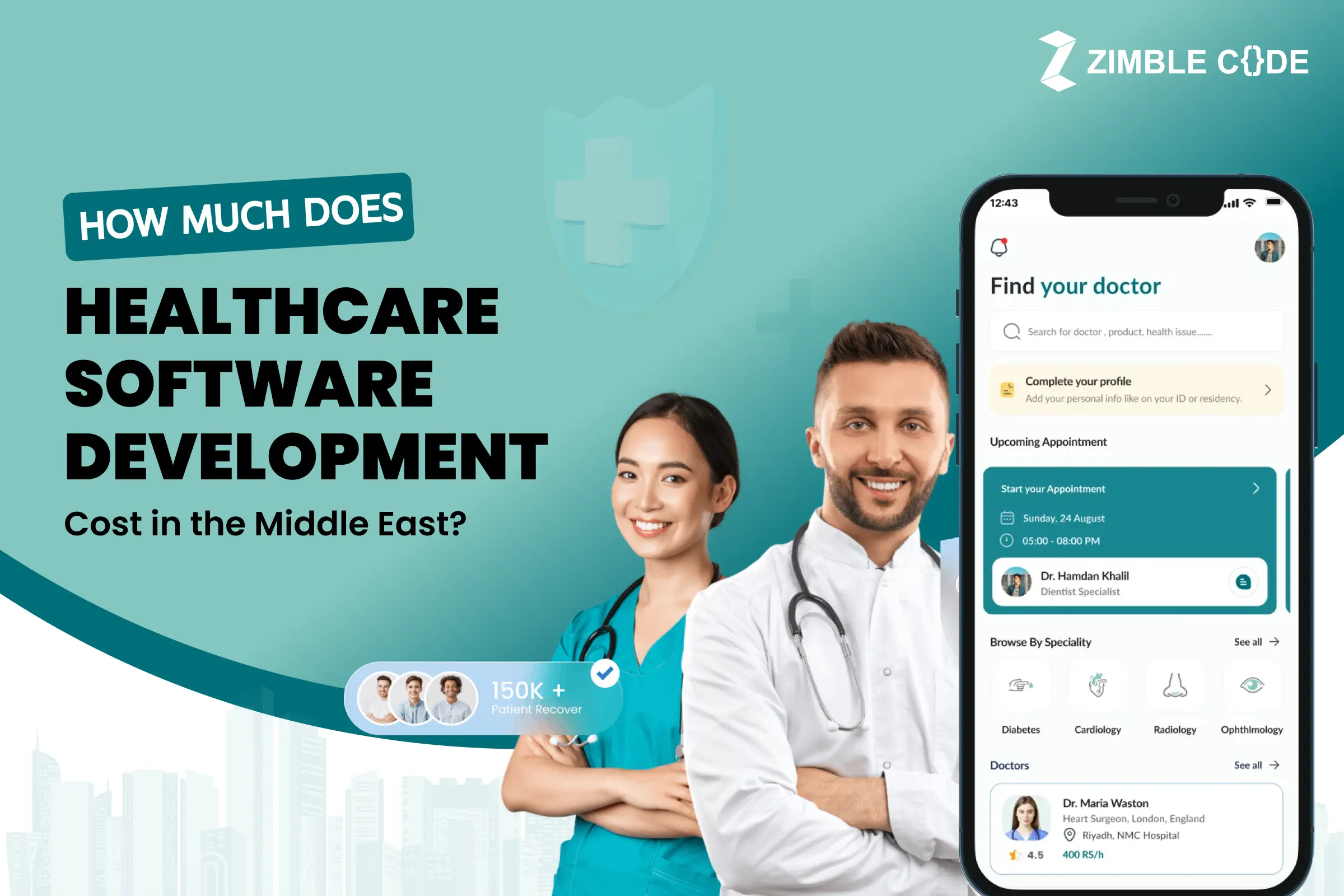
Healthcare digital transformation in the Middle East is accelerating at an unprecedented pace, driven by government-led initiatives, rising patient expectations, and rapid adoption of health tech.
Industry reports estimate that the regional healthcare and digital health market is growing at double-digit rates, with strong investments in hospital systems and AI-driven diagnostics across the UAE and Saudi Arabia.
As healthcare providers move toward data-driven, patient-centric care models, software has become a foundational requirement rather than a supporting tool. However, development costs vary widely due to regulatory compliance, security demands, system complexity, and long-term scalability needs. As a result, understanding these cost dynamics is critical for healthcare organizations planning sustainable digital investments.
This blog explains healthcare software development costs in the Middle East and practical strategies to optimize investment decisions.
What is Healthcare Software Development?
Healthcare software development involves creating digital systems that support clinical care, medical operations, and patient engagement. In the Middle East, this includes hospital and clinic management systems, EMR platforms, telemedicine solutions, mobile health applications, and healthcare analytics tools.
Unlike generic enterprise software, healthcare solutions must comply with strict data protection laws, interoperability standards, and government regulations. These systems also support complex workflows across clinicians, patients, insurers, and regulatory bodies. Due to these requirements, healthcare software development in the Middle East demands specialized expertise, robust security architecture, and higher investment.
Key Factors Affecting Healthcare Software Development Cost
Healthcare software development costs in the Middle East are driven by regulatory, technical, and operational requirements. Each factor below contributes a distinct, measurable cost component to the overall investment.
- Regulatory Compliance Requirements
Healthcare regulations in the UAE, Saudi Arabia, and Qatar require strict compliance as legal validation and audit readiness become more complex. As a result, compliance typically accounts for 15–25% of total development cost.
- Feature Scope and Customization
While basic healthcare features require moderate effort, advanced capabilities such as AI diagnostics and telemedicine significantly expand the scope of development. As a result, feature development accounts for 20–30% of the overall budget.
- Data Security and Privacy Controls
Healthcare data sensitivity requires strong encryption and access controls as security implementation becomes mandatory. This requirement generally adds 10–15% to healthcare app development costs due to testing and validation.
- Technology Stack and Architecture
Modern architectures improve scalability, but cloud-native, AI-driven, or interoperable systems require specialized expertise. Thereby, technology selection can increase upfront costs by 10–20%.
- Platform and Device Support
Though web-based systems are simpler to build, mobile and hybrid platforms demand additional design and testing. As a result, multi-platform support increases costs by 10–18%.
- Third-Party System Integrations
Healthcare software often integrates with labs and insurers, with integration complexity increasing with each external system. Typically, integrations add 5–12% per system, depending on security requirements.
- Maintenance and Regulatory Updates
Healthcare platforms require continuous updates, which makes post-launch support unavoidable. Therefore, annual maintenance typically accounts for 15–20% of the initial project value.
Average Cost of Healthcare Software Development in the Middle East (2026)
The healthcare software development cost in the UAE largely depends on system complexity, regulatory compliance, and the depth of required features. In 2026, development costs typically range from AED 37,000 for basic solutions to over AED 1.8 million for large-scale enterprise platforms.
- Simple healthcare systems with limited functionality, such as appointment scheduling or basic patient records, fall at the lower end of this range.
- Mid-level platforms that include advanced workflows, role-based access, and enhanced security generally require a higher investment due to increased development and testing effort.
- Enterprise-grade healthcare software, particularly systems that support AI, large data volumes, or multi-facility operations, often exceed AED 3.6 million, depending on scale and customization.
In fact, costs in the UAE and Saudi Arabia are usually higher due to strict regulatory frameworks, higher compliance standards, and expectations for secure, scalable infrastructure.
Cost Breakdown by Software Type
Healthcare software development costs in the Middle East vary based on system purpose, data complexity, and compliance requirements. It demands a different level of technical effort, security planning, and long-term support, such as:
Hospital & Clinic Management Systems (HMS)
HMS platforms manage scheduling, billing, inventory, and clinical workflows across departments. The hospital management software cost in the Middle East typically ranges from AED 295,000 to AED 920,000, driven primarily by integrations and regulatory compliance requirements.
Electronic Medical Records (EMR/EHR)
EMR and EHR systems store large volumes of patient data and support clinical decision-making. The healthcare software development costs in the Middle East typically range between AED 220,000 and AED 735,000, depending on interoperability standards and data security requirements.
Telemedicine Platforms
Telemedicine platforms support virtual consultations, e-prescriptions, and remote monitoring services. The healthcare software development costs in the Middle East generally fall between AED 150,000 and AED 550,000, influenced by real-time performance and cloud security requirements.
Healthcare Mobile Apps
Healthcare mobile apps serve patients or providers with different functional priorities and workflows. The custom healthcare software development cost ranges from AED 75,000 to AED 295,000, depending on whether cross-platform or native development is chosen.
AI & Analytics-Driven Healthcare Software
AI-driven healthcare software enables diagnostics, predictive analytics, and population health insights. These healthcare IT solutions in the Middle East often cost AED 440,000 to AED 1.1 million or more due to complex data models and specialized engineering requirements.

Development Timeline & Team Structure
Healthcare software development timelines vary based on system complexity and regulatory requirements. Simple healthcare applications typically take 3 to 6 months, while medium-complex platforms require 8 to 10 months for design, development, and testing. In fact, enterprise or AI-driven healthcare systems often extend beyond 12 months, especially when integrations and compliance approvals are involved.
These projects rely on a multidisciplinary team that includes a product manager and business analyst, UI/UX designers, backend and frontend developers, and QA engineers. Additionally, devOps, security, and compliance specialists play a critical role in deployment and regulatory alignment. Therefore, longer timelines typically lead to higher costs due to extended team engagement and increased infrastructure usage.
How to Reduce Healthcare Software Development Costs?
Reducing custom medical software development pricing requires strategic planning that protects compliance, security, and performance. The following approaches help manage budgets while supporting sustainable system growth:
Build an MVP First
An MVP focuses on essential features that validate functionality and user demand. This approach reduces development scope and allows faster feedback before investing in advanced capabilities.
Prioritize Compliance-Critical Features
Regulatory and security requirements should be addressed at the earliest stage. In fact, delaying non-essential features helps control complexity and prevents unnecessary development effort.
Use Modular & Scalable Architecture
Modular systems allow features to be added or modified independently over time. This structure minimizes rework and supports long-term scalability without requiring a redesign of the entire platform.
Utilize Cross-Platform Development
Cross-platform frameworks enable a single codebase to run on multiple devices and operating systems. This approach simplifies maintenance and reduces duplication of development effort.
Choosing the Right Healthcare Software Development Partner
Selecting the right healthcare app development company in the Middle East is crucial to project success and regulatory compliance. As healthcare regulations vary across the UAE, Saudi Arabia, and Qatar, an experienced partner such as ZimbleCode must demonstrate strong regional expertise to navigate these requirements effectively. In fact, proven experience in healthcare projects demonstrates the ability to manage complex data structures, system integrations, and clinical workflows with precision.
Moreover, a security-first and compliance-first development approach is essential to safeguarding patient data and meeting audit expectations. Such partners emphasize transparent pricing, structured communication, and long-term support to help organizations manage costs and scale their healthcare platforms with confidence. Ultimately, the right partner delivers reliable software while minimizing operational and regulatory risks.
Frequently Asked Questions (FAQs)
Q1. How does the data hosting location affect development cost?
Local data hosting requirements in the Middle East may increase infrastructure and compliance-related expenses.
Q2. How often do healthcare regulations change in the Middle East?
Regulations evolve frequently, especially in the UAE and KSA, requiring periodic software updates.
Q3. Why is a ZimbleCode trusted healthcare software development company?
ZimbleCode combines healthcare domain expertise with compliance-driven engineering to deliver secure, scalable medical software.




Leave A Comment