


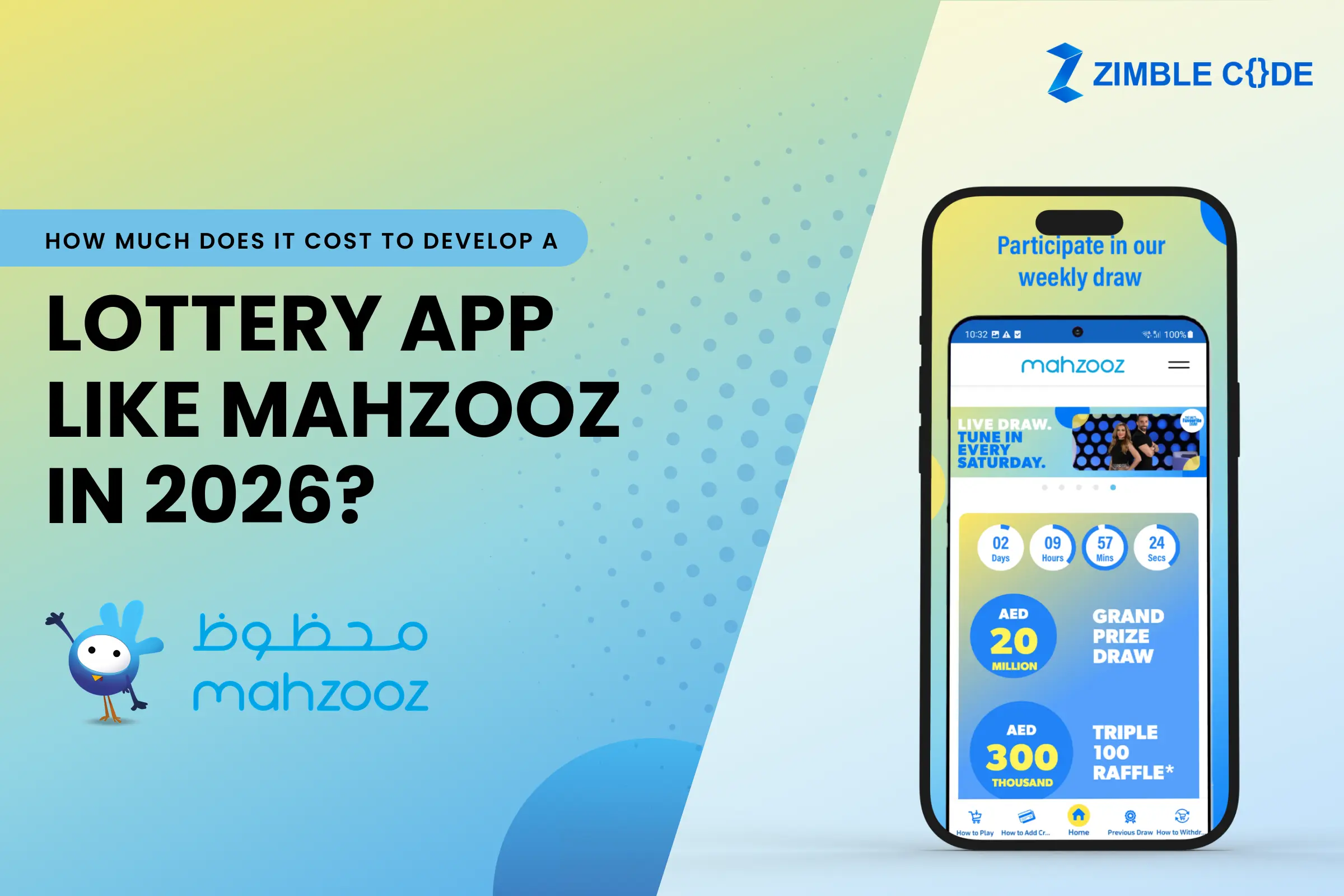
Digital lottery platforms are gaining rapid momentum as users increasingly prefer secure mobile-based participation over traditional ticket sales. With the global online lottery market projected to exceed $20 billion by 2027, 2026 stands out as a critical year amid tighter regulations, heightened security expectations, and growing demand for transparent, compliant systems. As a result, development costs now vary widely based on technology choices, scalability needs, and legal requirements.
Unlike basic gaming or raffle apps, Mahzooz-like platforms are enterprise-grade systems built to handle real-money transactions, large user volumes, and real-time draw operations within regulated environments. Their costs are driven by a compliance-first architecture, complex backend logic, and the reliability of lottery app development services rather than surface-level features. This blog will break down the real cost to develop a lottery app like Mahzooz in 2026.
Breaking Down the Development Cost of a Mahzooz-Like Lottery App by Phase
The total cost of lottery app development like Mahzooz in 2026 varies based on the level of features, compliance requirements, and scalability expectations. Though basic platforms serve limited use cases, enterprise-grade systems require higher investment to ensure security, fairness, and regulatory approval.
- MVP Lottery App
A basic lottery app with core functionality typically costs between $20,000 and $40,000 in 2026. This entry-level version includes essential features such as user registration, ticket purchasing, and a single payment gateway. While it significantly reduces initial expenditure compared to higher-tier options, it provides limited scalability and minimal compliance, making it best suited for pilot launches or restricted markets rather than broader commercial operations.
- Mid-Level Lottery App
A mid-level Mahzooz app clone development generally costs between $40,000 and $100,000 and supports broader user adoption. In addition to core features, it includes OTP-based security, multiple payment options, and multilingual support. As a result, this level balances affordability with stability, making it a common choice for startups targeting regulated but moderately sized markets.
- Enterprise-Grade Mahzooz-Like App:
A fully compliant, high-scale enterprise lottery app development typically costs $100,000 to $300,000 or more. In contrast to the lower-cost options, this level covers advanced KYC and AML systems, real-time draw management, high-volume transaction handling, and comprehensive regulatory audits. It is specifically designed for national or international operations requiring maximum trust and top-tier performance, setting it apart from basic and mid-level solutions.ce.
Breaking Down the Development Cost of a Mahzooz-Like Lottery App by Phase
Each development phase contributes uniquely to the total budget. In fact, understanding these phases in lottery app development like Mahzooz helps businesses allocate funds effectively and avoid overspending during later stages.
-
Planning and Requirement Analysis
This phase costs $5,000–$15,000 and focuses on defining app goals, target markets, feature scope, and legal feasibility. As lottery platforms face strict regulations, early analysis reduces future risks. Although relatively low-cost, this phase prevents costly rework and compliance failures later, making it a foundational investment for successful development.
-
UI and UX Design
Design costs range between $10,000 and $25,000, depending on customization and accessibility needs. This phase ensures intuitive navigation, transparent ticket flows, and trust-building visuals. As white-label lottery app development handles real money, thoughtful design improves user confidence and retention, directly influencing the platform’s commercial success.
-
Front-End Development
Front-end development costs typically range from $25,000 to $40,000. This includes building responsive screens for ticket selection, user dashboards, and result displays. In fact, costs vary based on whether native or cross-platform frameworks are used. Therefore, smooth performance across devices is essential, especially during peak usage periods.
-
Backend and Core Lottery Engine
Backend development is the most expensive phase, often costing $40,000 to $75,000 or more. It includes ticket generation logic, draw algorithms, payout processing, and database security. As the backend must handle large transaction volumes and ensure fairness, a robust architecture significantly increases development effort and cost.
-
Payments and Real-Time Integrations
Payment gateway integration and real-time updates usually cost between $10,000 and $30,000. This covers secure transactions, instant notifications, and synchronization of draw results. As payment reliability and real-time accuracy are critical to user trust, these integrations require extensive testing and compliance validation.
-
Security and Regulatory Compliance
Security and compliance implementation can cost $15,000 to $50,000 or more. This includes encryption, KYC and AML verification, age checks, and geolocation controls. As regulations differ by region, customization is often required, making compliance one of the most influential cost factors in 2026.
-
Testing and Quality Assurance
Testing and quality assurance typically cost between $8,000 and $20,000. This phase ensures system stability, security, and performance under heavy load. Given the financial nature of online lottery app development, thorough testing is essential to avoid technical failures that can damage credibility and revenue.
-
Deployment and Launch Setup
Deployment costs range from $3,000 to $10,000 and include app store submissions, server configuration, and final compliance checks. Though this stage is less expensive, delays caused by platform rejections or regulatory adjustments can indirectly increase overall custom lottery app development costs.
How Much Do Licensing and Legal Requirements Cost for a Lottery App?
Legal and licensing-related costs are unavoidable in lottery app development. These expenses ensure lawful operation, user protection, and regulatory compliance. In 2026, compliance costs make up a significant part of the budget and often continue after launch.
-
Lottery Licensing and Regulatory Approval (USD $10,000–$50,000+)
Lottery licensing costs range from $10,000 to $50,000+, depending on the country and regulatory authority. These fees cover government approvals, operational permits, and jurisdiction-specific permissions. As lottery apps are tightly regulated, obtaining licenses can take time and legal expertise. As a result, businesses must budget carefully to avoid delays or penalties before launch.
-
Legal Consultation and Documentation
Legal consultation costs typically range from $5,000 to $20,000 and cover drafting terms and conditions, privacy policies, and compliance documentation. In addition, lawyers review operational models to ensure compliance with gambling laws. While these expenses may seem optional, proper legal guidance reduces the risk of violations and costly legal disputes later.
-
Verification Compliance
Implementing KYC, AML, and age verification systems in lottery app development like Mahzooz generally costs between $8,000 and $30,000 or more. These tools verify user identity and prevent fraud or underage access. As most regulators mandate these checks, businesses must integrate certified third-party services, which increases both setup and ongoing operational costs.
-
Geolocation and Regional Restriction Controls
Geolocation compliance typically costs $3,000 to $15,000, depending on coverage and accuracy requirements. This system ensures users can only access the app in legally approved regions. As lottery laws differ by location, accurate geofencing helps businesses avoid unauthorized access and potential regulatory action.
-
Ongoing Compliance Audits and Renewals
Post-launch compliance costs usually range from $5,000 to $25,000 per year. These expenses include license renewals, regulatory audits, reporting updates, and legal reviews. As laws frequently change, ongoing compliance is essential to keep the app operational and legally protected in the long term.
Is Mahzooz Style Lottery App Development Worth the Investment in 2026?
Developing a Mahzooz-like lottery app in 2026 can be a strong investment when approached with a long-term strategy. Although the initial development, compliance, and infrastructure costs are high, lottery platforms benefit from repeat user participation and steady revenue generation. Once trust is established, users tend to engage consistently with draws, generating predictable income from ticket sales, subscriptions, and strategic partnerships.
However, the success of such an investment depends heavily on execution and technical expertise. In fact, regulatory complexity, security expectations, and scalability challenges require a lottery app development company in the USA with proven experience in compliant digital platforms, such as ZimbleCode. With the right technology foundation and compliance-first approach, a Mahzooz-like app can evolve into a sustainable and profitable digital venture in 2026.
Frequently Asked Questions (FAQs)
Q1. Are AI features increasing lottery app development costs in 2026?
AI-based fraud detection and user analytics add value but also increase development and maintenance costs.
Q2. Is cloud hosting mandatory for lottery apps in 2026?
Though not mandatory, cloud hosting is preferred for reliability, security, and scalability.
Q3. Is it possible to launch a lottery app without physical draw infrastructure?
Digital draw systems are common, but they require certified RNG and audit-ready setups.


Leave A Comment